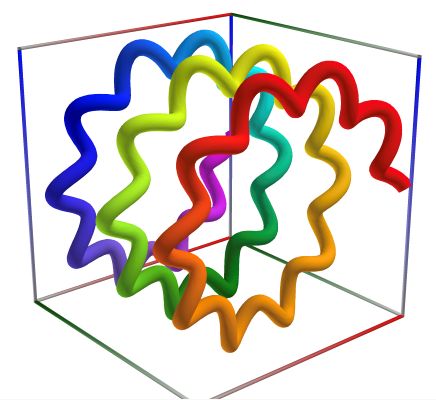
(Coil) springs#
See also: https://en.wikipedia.org/wiki/Coil_spring
See also: https://en.wikipedia.org/wiki/Spring_(device)
Spring 1#
The XML code for the example below can be found online in the DataXlCalcNet repository or in the corresponding local DataXlCalcNet folder in the files D01a_Path_Spring1.3D.xml (D01a-c).
The example below uses the following code in C#
var x = ((-3.75 * t + 100) * Math.Sin(t * Math.PI)) / 100;
var z = (20 * t) / 100;
var y = ((-3.75 * t + 100) * Math.Cos(t * Math.PI)) / 100;
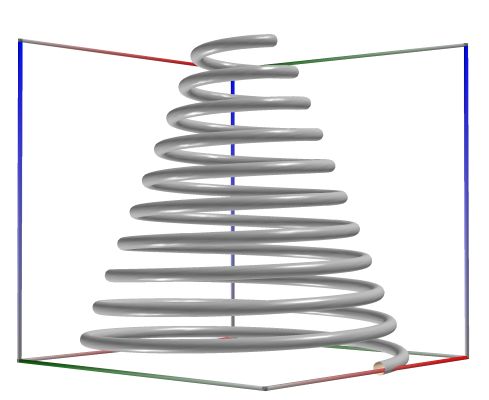 \(\quad\)
 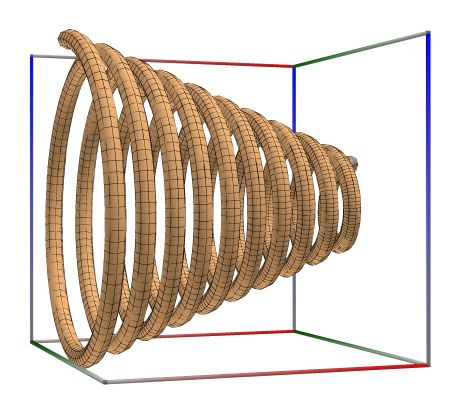 \(\quad\)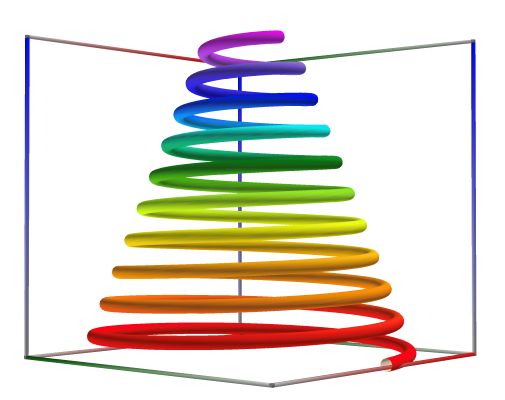
Spring 2#
The XML code for the example below can be found online in the DataXlCalcNet repository or in the corresponding local DataXlCalcNet folder in the files D02a_Path_Spring2.3D.xml (D02a-b).
The example below uses the following code in C#
var x = (Math.Sqrt(10000 - 100 * t * t) * Math.Sin(t * Math.PI)) / 100;
var z = (20 * t) / 100;
var y = (Math.Sqrt(10000 - 100 * t * t) * Math.Cos(t * Math.PI)) / 100;
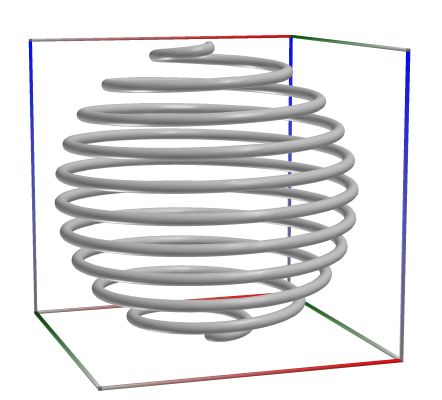 \(\quad\)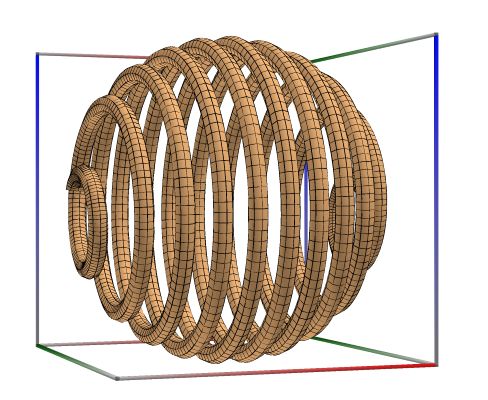
Spring 3#
The XML code for the example below can be found online in the DataXlCalcNet repository or in the corresponding local DataXlCalcNet folder in the files D04a_Path_Spring4.3D.xml (D04a-b).
The example below uses the following code in C#
var x = (Math.Sqrt(10000 - 100 * t * t) * Math.Sin(t * Math.PI)) / 100;
var z = 209.22 * (Math.Tanh(0.1896 * t)) / 100;
var y = (Math.Sqrt(10000 - 100 * t * t) * Math.Cos(t * Math.PI)) / 100;
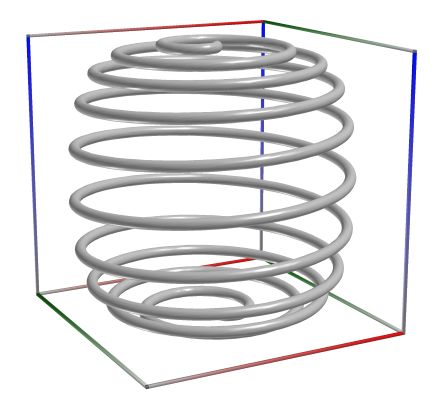 \(\quad\)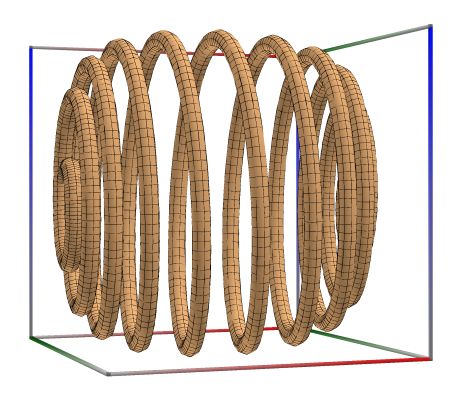
Spring 4#
The XML code for the example below can be found online in the DataXlCalcNet repository or in the corresponding local DataXlCalcNet folder in the files D04a_Path_Spring4.3D.xml (D04a-b).
The example below uses the following code in C#
var x = (200 * Math.Cos(0.05 * t * Math.PI) * Math.Sin(t * Math.PI)) / 100;
var z = 209.22 * (Math.Tanh(0.1896 * t)) / 100;
var y = (200 * Math.Cos(0.05 * t * Math.PI) * Math.Cos(t * Math.PI)) / 100;
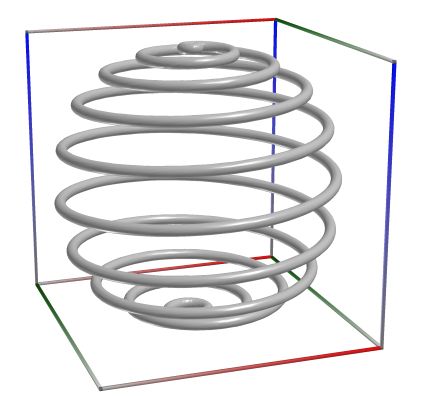 \(\quad\)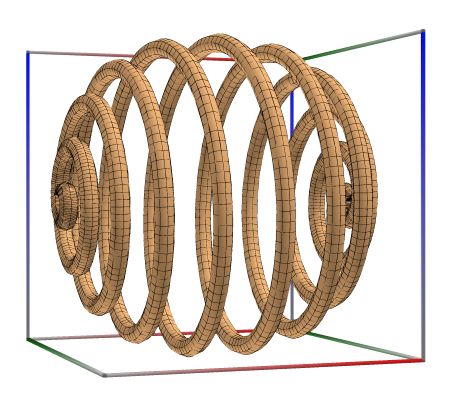
Spring 5#
The XML code for the example below can be found online in the DataXlCalcNet repository or in the corresponding local DataXlCalcNet folder in the files D05a_Path_Spring5.3D.xml (D05a-b).
The example below uses the following code in C#
double e = Math.Exp(-(0.2 * t) * (0.2 * t));
var x = (200 * e * Math.Sin(t * Math.PI)) / 100;
var z = 209.22 * (Math.Tanh(0.1896 * t)) / 100;
var y = (200 * e * Math.Cos(t * Math.PI)) / 100;
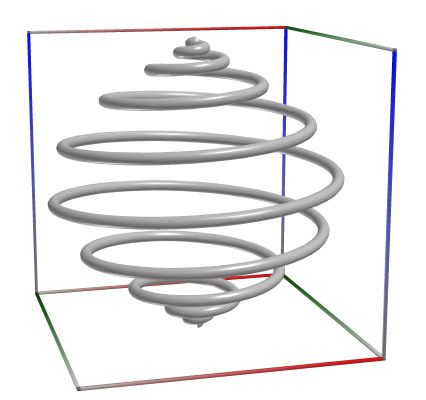 \(\quad\)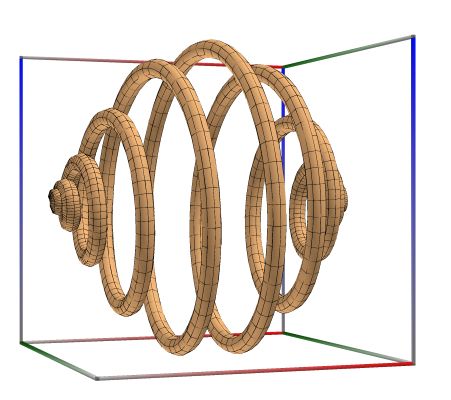
Spring 6#
The XML code for the example below can be found online in the DataXlCalcNet repository or in the corresponding local DataXlCalcNet folder in the files D06a_Path_Spring6.3D.xml (D06a-b).
The example below uses the following code in C#
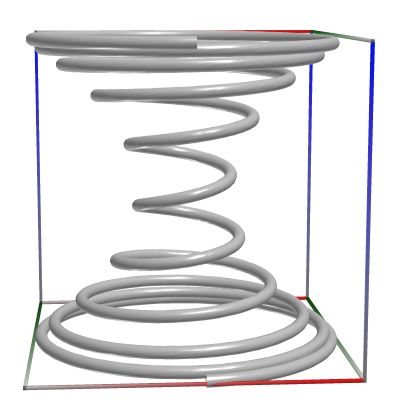
double e = Math.Exp(-(0.2 * t) * (0.2 * t));
var x = ((200 - 140 * e) * Math.Sin(t * Math.PI)) / 100;
var z = 207.46 * (Math.Tanh(0.2 * t)) / 100;
var y = ((200 - 140 * e) * Math.Cos(t * Math.PI)) / 100;
 \(\quad\)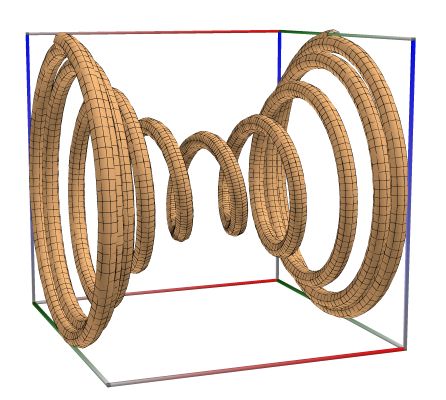
Spring 7#
The XML code for the example below can be found online in the DataXlCalcNet repository or in the corresponding local DataXlCalcNet folder in the files D07a_Path_Spring7.3D.xml (D07a-b).
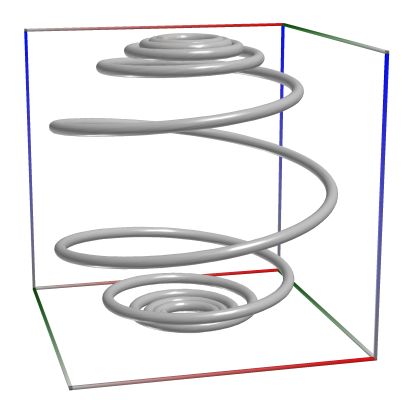
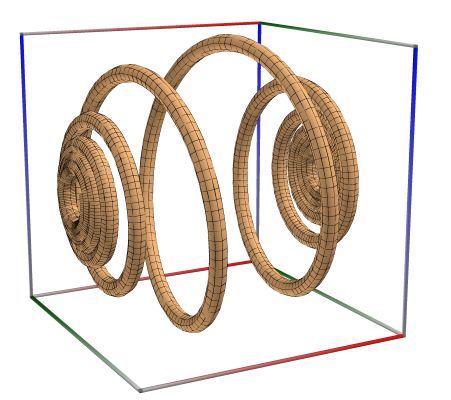
The example below uses the following code in C#
var x = (200 * Math.Cos(t) * Math.Cos(Math.Atan(0.15 * t))) / 100;
var z = -200 * Math.Sin(Math.Atan(0.15 * t)) / 100;
var y = (200 * Math.Sin(t) * Math.Cos(Math.Atan(0.15 * t))) / 100;
 \(\quad\)
  \(\quad\)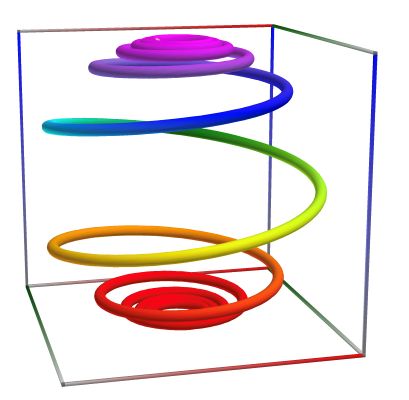
Spring 8#
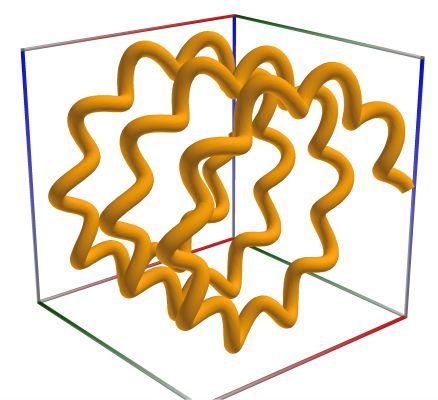
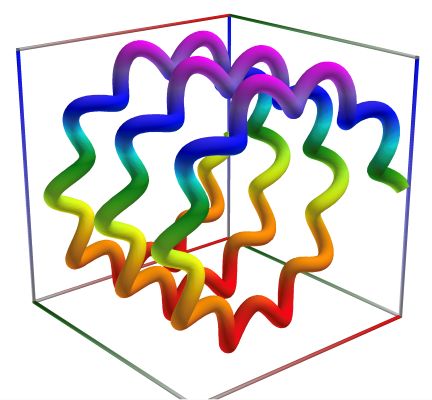
The XML code for the example below can be found online in the DataXlCalcNet repository or in the corresponding local DataXlCalcNet folder in the files D08a_Path_Spring8.3D.xml (D08a-b).
The example below uses the following code in C#
double R = 100.0;
double G = 160.0;
double D = 15.0;
double N = 10.0;
var x = (Math.Cos(t * Math.PI) * R + Math.Cos(t * Math.PI) * D * Math.Cos(N * t * Math.PI)) / 100;
var y = (D * Math.Sin(N * t * Math.PI) + 0.5 * G * t) / 100;
var z = (Math.Sin(t * Math.PI) * R + Math.Sin(t * Math.PI) * D * Math.Cos(N * t * Math.PI)) / 100;
 \(\quad\)
  \(\quad\)