Builtin solids with support for textures#
Sphere#
The XML code for the example below can be found online in the DataXlCalcNet repository or in the corresponding local DataXlCalcNet folder in the files D01a_Sphere.3D.xml (D01a-f).
A sphere is a geometrical object that is a three-dimensional analogue to a two-dimensional circle.
See also: https://en.wikipedia.org/wiki/Sphere
See also: https://mathworld.wolfram.com/Sphere.html
See also: https://mathcurve.com/surfaces.gb/sphere/sphere.shtml
The example below uses the following code in C#
var radius = 1.0;
var numTheta = 20;
var numPhi = 20;
var proc = BuiltIn.SetSphere(radius, numTheta, numPhi);
 \(\quad\)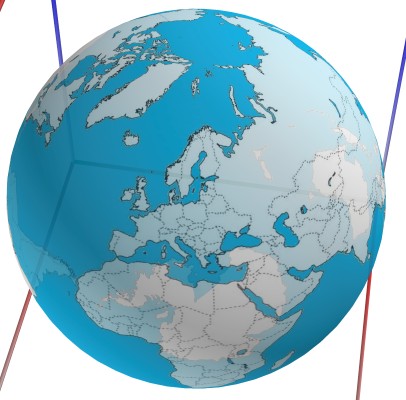
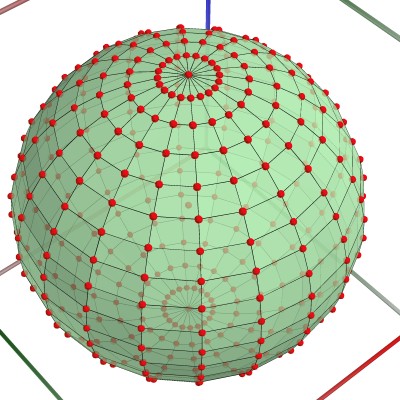
The example below uses the following code in C#
var radius = 1.0;
var numTheta = 20;
var numPhi = 20;
var proc = BuiltIn.SetSphere(radius, numTheta, numPhi);
 \(\quad\)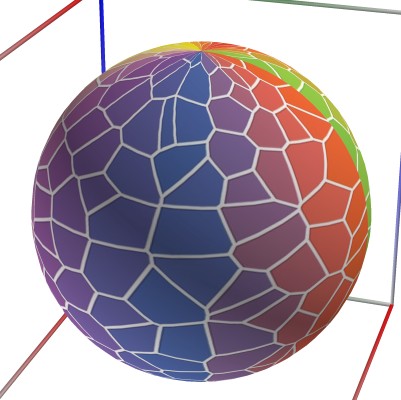
The example below uses the following code in C#
var radius = 1.0;
var numTheta = 20;
var numPhi = 20;
var proc = BuiltIn.SetSphere(radius, numTheta, numPhi);
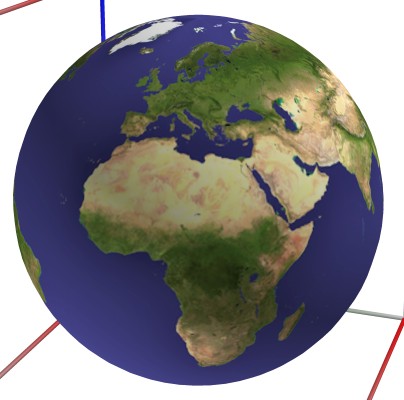 \(\quad\)
Prolate Spheroid#
The XML code for the example below can be found online in the DataXlCalcNet repository or in the corresponding local DataXlCalcNet folder in the files D02a_PSpheroid.3D.xml (D02a-b).
See also: https://mathworld.wolfram.com/ProlateSpheroid.html
See also: https://mathworld.wolfram.com/Spheroid.html
See also: https://en.wikipedia.org/wiki/Spheroid#Prolate_spheroids
See also: https://en.wikipedia.org/wiki/Spheroid#
The example below uses the following code in C#
var radius = 1.0;
var factor1 = 1.5;
var numTheta = 20;
var numPhi = 20;
var proc = BuiltIn.SetProlateSpheroid(radius, factor1, numTheta, numPhi);
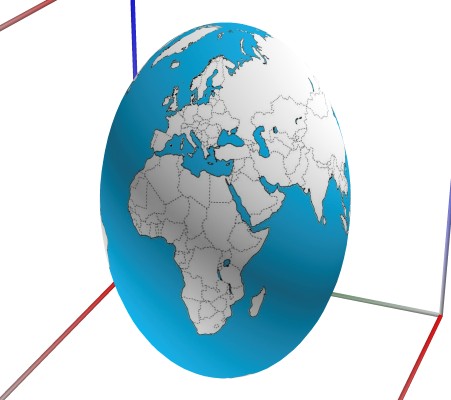 \(\quad\)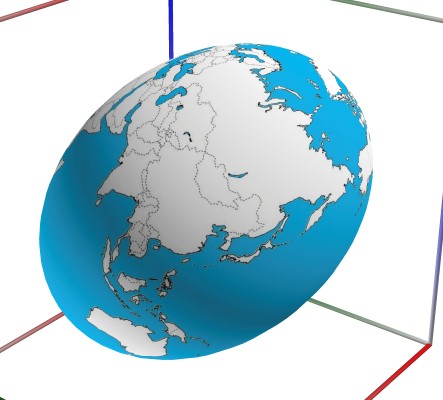
Oblate Spheroid#
The XML code for the example below can be found online in the DataXlCalcNet repository or in the corresponding local DataXlCalcNet folder in the files D03a_OSpheroid.3D.xml (D03a-d).
See also: https://mathworld.wolfram.com/OblateSpheroid.html
See also: https://mathworld.wolfram.com/Spheroid.html
See also: https://en.wikipedia.org/wiki/Spheroid#Oblate_spheroids
See also: https://en.wikipedia.org/wiki/Spheroid#
The example below uses the following code in C#
var radius = 1.0;
var factor2 = 0.5;
var numTheta = 20;
var numPhi = 20;
var proc = BuiltIn.SetOblateSpheroid(radius, factor2, numTheta, numPhi);
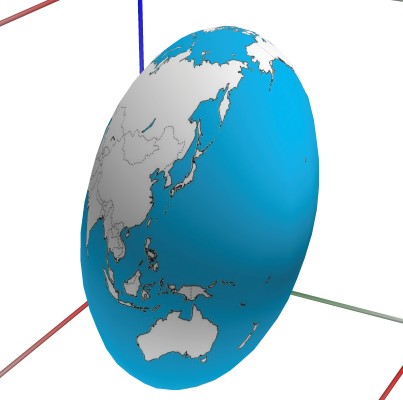 \(\quad\)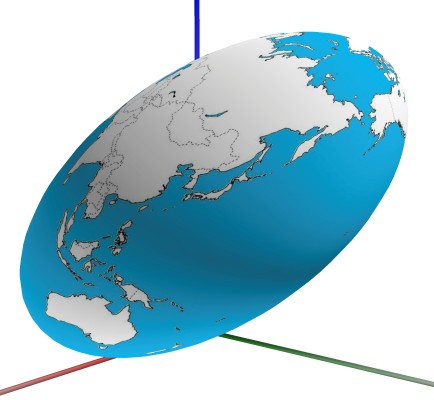
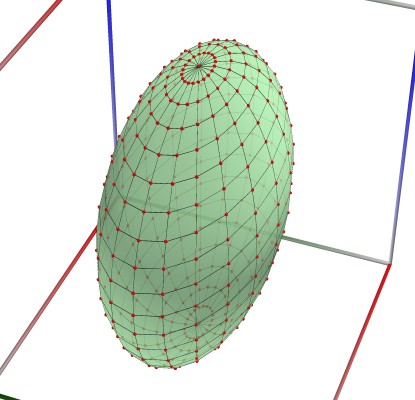
The example below uses the following code in C#
var radius = 1.0;
var factor2 = 0.5;
var numTheta = 20;
var numPhi = 20;
var proc = BuiltIn.SetOblateSpheroid(radius, factor2, numTheta, numPhi);
 \(\quad\)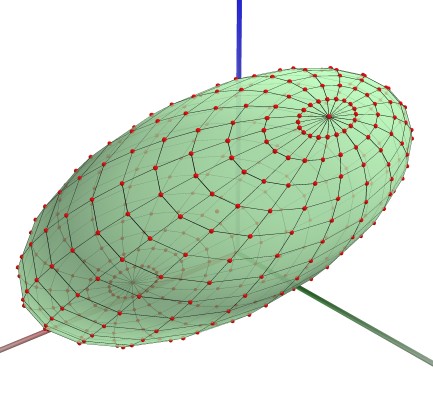
Ellipsoid#
The XML code for the example below can be found online in the DataXlCalcNet repository or in the corresponding local DataXlCalcNet folder in the files D04a_Ellipsoid.3D.xml (D04a-b).
See also: https://mathworld.wolfram.com/Ellipsoid.html
See also: https://en.wikipedia.org/wiki/Ellipsoid
The example below uses the following code in C#
var radius = 1.0;
var factor1 = 1.5;
var factor2 = 0.5;
numTheta = 20;
var numPhi = 20;
var proc = BuiltIn.SetEllipsoid(radius, factor1, factor2, numTheta, numPhi);
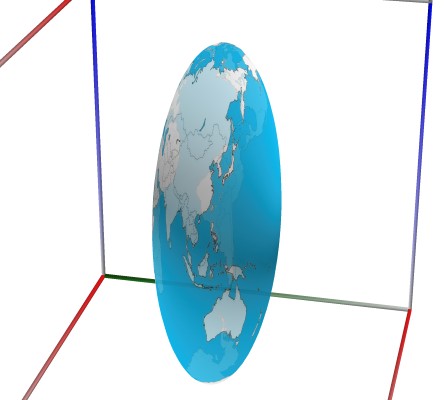 \(\quad\)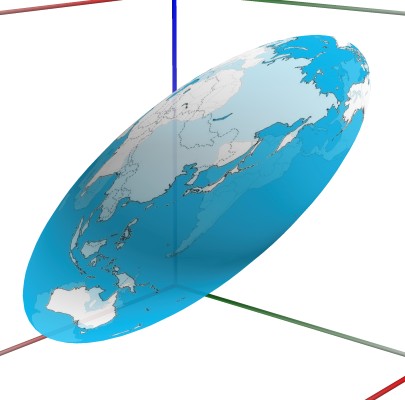
Torus#
The XML code for the example below can be found online in the DataXlCalcNet repository or in the corresponding local DataXlCalcNet folder in the files D05a_Torus.3D.xml (D05a-b).
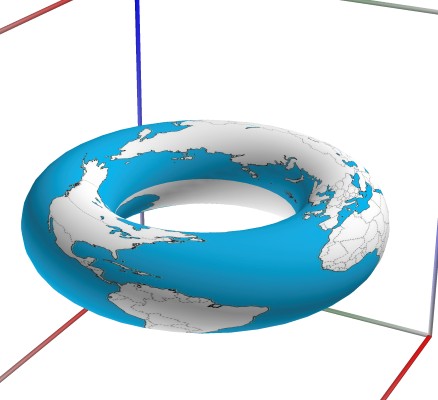
A torus is a surface of revolution generated by revolving a circle in three-dimensional space one full revolution about an axis that is coplanar with the circle. The main types of toruses include ring toruses, horn toruses, and spindle toruses. A ring torus is sometimes colloquially referred to as a donut or doughnut.
See also: https://en.wikipedia.org/wiki/Torus
See also: https://mathworld.wolfram.com/Torus.html
See also: https://mathcurve.com/surfaces.gb/tore/tore.shtml
var Radius = 0.6;
var radius = 0.2;
var numTheta = 40;
var numPhi = 40;
var proc = BuiltIn.SetTorus(Radius, radius, numTheta, numPhi);
 \(\quad\)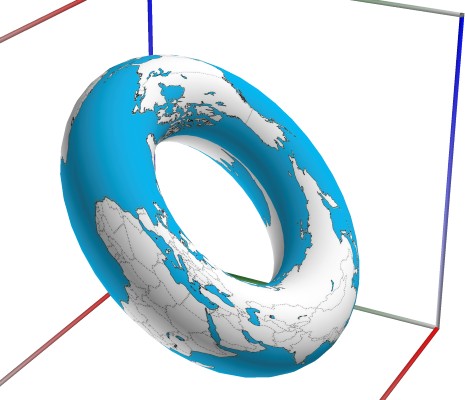
Rectangular cuboid#
The XML code for the example below can be found online in the DataXlCalcNet repository or in the corresponding local DataXlCalcNet folder in the files D06a_Cuboid.3D.xml (D06a-b).
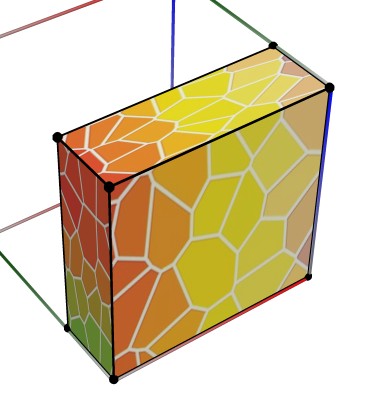
A rectangular cuboid is a special case of a cuboid with rectangular faces in which all of its dihedral angles are right angles. This shape is also called rectangular parallelepiped or orthogonal parallelepiped.
See also: https://en.wikipedia.org/wiki/Rectangular_cuboid
See also: https://mathworld.wolfram.com/Cuboid.html
The example below uses the following code in C#
var a = 1.0;
var b = 3.0;
var c = 2.0;
var proc = BuiltIn.SetCuboid(a, b, c);
 \(\quad\)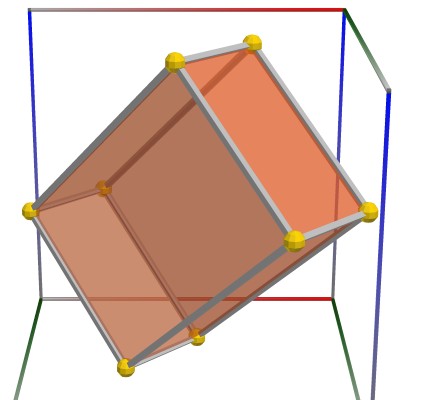
Rhombohedron#
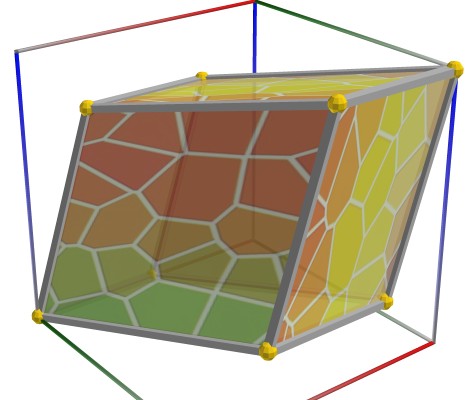
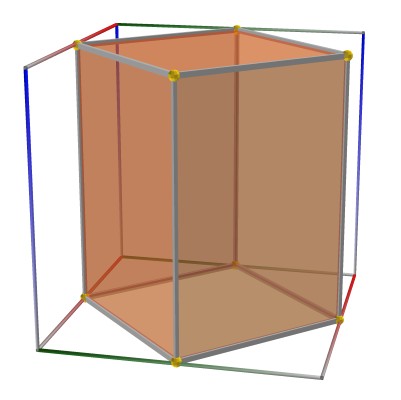
The XML code for the example below can be found online in the DataXlCalcNet repository or in the corresponding local DataXlCalcNet folder in the files D07a_Rhombohedron_60.3D.xml (D07a-c).
A rhombohedron is a parallelepiped bounded by six rhombi such that opposite faces are congruent. Special cases include the cube, acute golden rhombohedron, and obtuse golden rhombohedron.
See also: https://en.wikipedia.org/wiki/Rhombohedron
See also: https://mathworld.wolfram.com/Rhombohedron.html
See also: https://mathworld.wolfram.com/GoldenRhombohedron.html
See also: https://mathworld.wolfram.com/AcuteGoldenRhombohedron.html
See also: https://mathworld.wolfram.com/ObtuseGoldenRhombohedron.html
The example below uses the following code in C#
var theta = 60.0;
var proc = BuiltIn.SetRhombohedron(theta);
 \(\quad\)
  \(\quad\)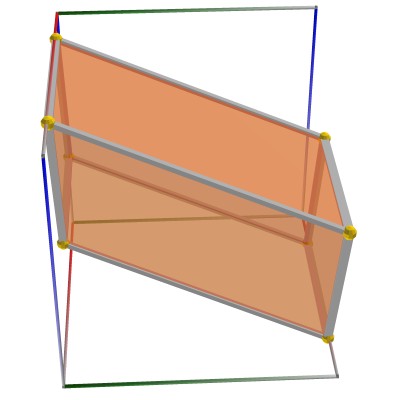
Parallelepiped#
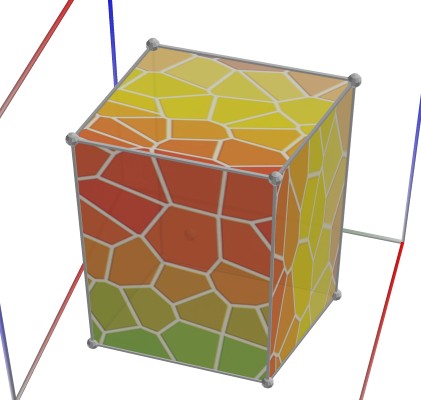
The XML code for the example below can be found online in the DataXlCalcNet repository or in the corresponding local DataXlCalcNet folder in the files D08a_Parallelepiped.3D.xml (D08a-b).
See also: https://en.wikipedia.org/wiki/Parallelepiped
See also: https://mathworld.wolfram.com/Parallelepiped.html
The example below uses the following code in C#
var a = 1.0;
var b = 3.0;
var c = 2.0;
var alpha = 90.0;
var beta = 90.0;

var proc = BuiltIn.SetParallelepiped(a, b, c, alpha, beta);
 \(\quad\)